
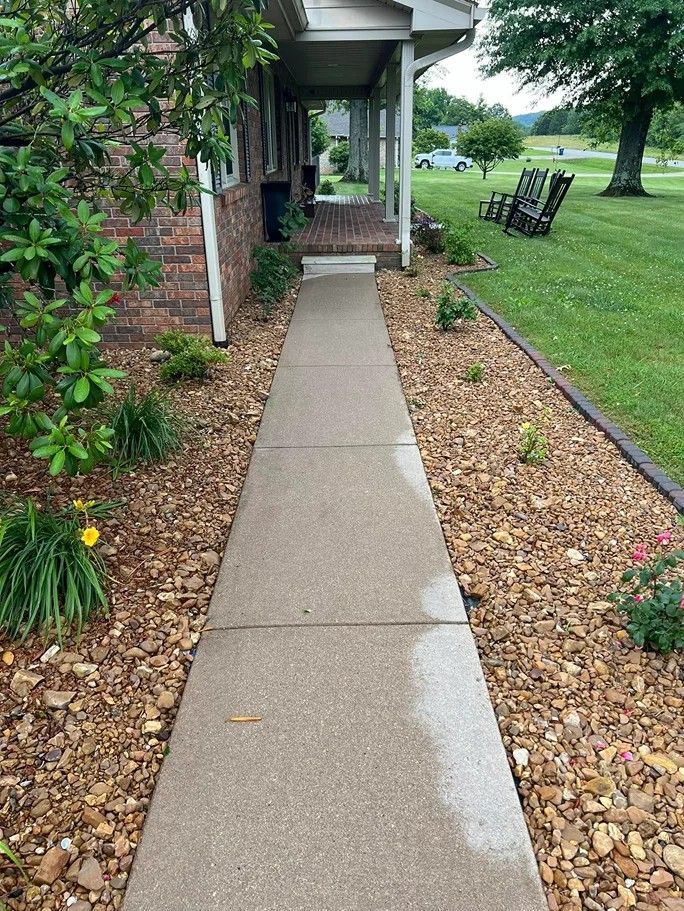
Walkways Free of Slippery Buildup
Sidewalk Cleaning in Somerset for concrete pathways showing algae, mildew, and weather-related staining
Shaded sidewalks develop a dark, slick coating within weeks of rain exposure because algae and mildew colonize concrete texture where moisture lingers and sunlight doesn't reach to inhibit growth. The buildup creates slip hazards near entryways and makes properties appear neglected even when landscaping and structures remain well-maintained. Lake Cumberland Exterior Cleaning Service provides sidewalk cleaning in Somerset, Bronston, Science Hill, and surrounding areas for residential neighborhoods, commercial properties, and public-facing entrances where walkway appearance and safety require attention.
Sidewalk cleaning removes dirt, algae, mildew, and discoloration using pressure washing calibrated to concrete durability, with pre-treatment solutions applied to organic growth before mechanical cleaning. The process addresses walkways, connecting pathways, entry areas, and any concrete surface where foot traffic occurs and presentation matters.
Request sidewalk cleaning estimates for your specific walkway length, current buildup level, and any additional connecting surfaces requiring treatment.
The Difference Between Clean and Stained Walkways
Sidewalk cleaning involves edging along landscape beds to prevent soil washout, controlling water runoff to avoid flooding adjacent areas, and treating expansion joints where algae accumulates in cracks and seams that hold moisture longer than smooth concrete surfaces. Kentucky moisture and tree canopy coverage create ideal conditions for rapid regrowth, particularly on north-facing walkways and sections shaded by structures or vegetation throughout the day.
After cleaning, sidewalks return to uniform light gray instead of showing dark streaks where water drains or algae spreads, and the textured surface provides traction again rather than feeling slick underfoot when damp. Entry walkways no longer contrast visibly with cleaner driveway sections, and the property presents a cohesive, maintained appearance from street to door.
Routine sidewalk cleaning maintains curb appeal for homes and businesses, prevents the need for more aggressive treatment when stains become embedded, and addresses the safety concern of slippery walkways during morning dew or after rain events common in the region.
Common Questions About Walkway Cleaning
Customers throughout Somerset and neighboring communities ask about cleaning frequency, methods, and how sidewalk treatment fits into overall property maintenance.
Lake Cumberland Exterior Cleaning Service treats sidewalks, pathways, and entry areas where algae, mildew, and staining affect appearance and create slippery conditions. Schedule cleaning to restore walkway safety and improve property presentation before buildup becomes embedded in concrete texture.
What makes sidewalks more slippery than driveways in the same weather?
Sidewalks often receive more shade from trees, fences, or buildings compared to driveways in open areas, creating conditions where algae and mildew grow thicker and retain moisture longer to produce slick surfaces when wet.
How does cleaning affect the concrete finish or texture?
Proper pressure washing removes organic buildup and surface dirt without eroding concrete texture or exposing aggregate, maintaining the original broom finish or smooth trowel surface that provides the walkway's intended traction and appearance.
When do walkways need cleaning versus replacement?
Cleaning addresses discoloration, organic growth, and surface staining on structurally sound concrete, while replacement becomes necessary when cracking, settling, or spalling creates trip hazards or drainage problems that cleaning cannot resolve.
Why do entry walkways near doors show heavier staining?
Roof drip lines, gutter overflow, and landscaping irrigation often concentrate water flow along entry walks, creating consistent moisture that accelerates algae growth compared to sidewalk sections away from concentrated runoff patterns.
What happens to landscaping along cleaned sidewalks?
Mulch beds and plantings adjacent to walkways receive protection during cleaning to prevent washout or damage, and water pressure is angled away from root zones to avoid soil erosion that destabilizes plants or creates low spots near the concrete edge.